
ZEN FESTMÉNYEK ZEN PAINTING
« Zen illusztrációk
« Zen főoldal
« vissza a Terebess Online nyitólapjára

白隠慧鶴 Hakuin
Ekaku
(1686-1769)
Hakuin Ekaku (1686年 1月19日 - 1769年 1月18日) possessed an unusual ability to convey the meaning of Zen to large numbers of people from all classes and religions. Though he chose to work at a small temple in the countryside, he was frequently invited to lecture, and his writings were published, eventually bringing him fame. His writings could be rough, humorous, or sometimes even shocking, intended to rouse his followers from their complacency into a deeper contemplation of religion and spiritual life. His copious writings continue to maintain pivotal importance within the Rinzai Zen sect. His work, both as spiritual leader and as painter, had a profound effect on all subsequent Zen study and Zen painting.
PDF: Biography of Hakuin
by Richard Bowring
PDF: Hakuin
by Juhn Y. Ahn
PDF: The Sound of One Hand: Paintings and Calligraphy by Zen Master Hakuin
by Stephen Addiss with Audrey Yoshiko Seo. Boston and London: 2010.
PDF: Zen Paintings in Edo Japan (1600-1868): Playfulness and Freedom in the Artwork of Hakuin Ekaku and Sengai Gibon
by Aviman, Galit
Ashgate Publishing, 2014
Selected Writings I.
Selected Writings II.
Zazen WasanThe Ryu'un-ji Collection Zen Paintings and Calligraphy by Zen Master Hakuin
Hanazono Collection
The Meaning of Hakuin's painting Fuji daimyo gyoretsu 富士大名行列 (A daimyo procession under Mount Fuji)
Paintings of Zen Master Hakuin (The Huffinton Post)
The Interest in Hakuin's Art by Yoshizawa Katsuhiro
http://www.youtube.com/watch?v=nPB40HHR1ds#t=196
http://www.youtube.com/watch?v=ErB3oCPSFuk
http://www.youtube.com/watch?v=JU2jSP3lvE4
Hakuin in Japanese: HAKUIN ZENJI HOGO ZENSHU, 14 vols. Edited and annotated by YOSHIZAWA Katsuhiro. Kyoto: Zenbunka Kenkyusho (The Institute for Zen Studies), 1999-2003.
Hakuin practiced painting late in life, beginning in his sixties and continuing until his death at eighty-four. As he grew older, he increasingly relied on it as a means of communicating Zen ideals. By the end of his life, he had produced well over one thousand paintings and calligraphies in a remarkable range of styles and subjects, often suffused with humor. Though he painted a variety of subjects, the one that he returned to the most was Daruma. Daruma is typically shown with attributes thought to be South Asian—a heavy beard, large, bulging eyes (reflecting a legend that he pulled off his eyelids after becoming sleepy during meditation), and the elongated ears of an Indian noble, stretched by heavy earrings. However, the hooked nose, high cheekbones, and oval visage are seen again and again in Hakuin’s paintings of various subjects and may, in fact, reflect the physiognomy of the artist himself.
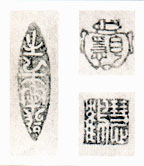
Three seals of
Hakuin > Show more


木像 mokuzō; wooden effigy of Hakuin, Shōin-ji
Portraits of Zen Masters by Hakuin
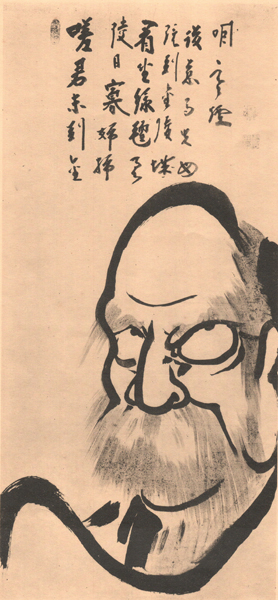
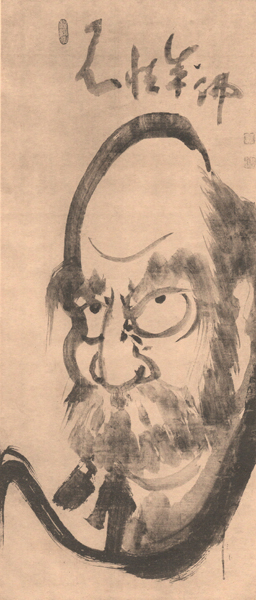
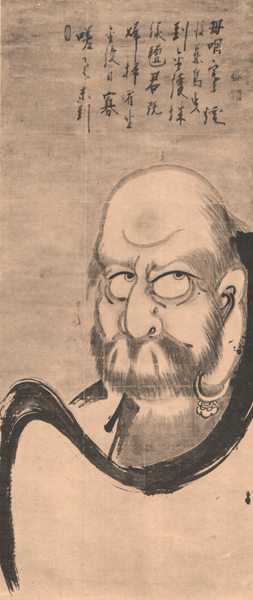
Bodhidharma (?-532)
> Show more
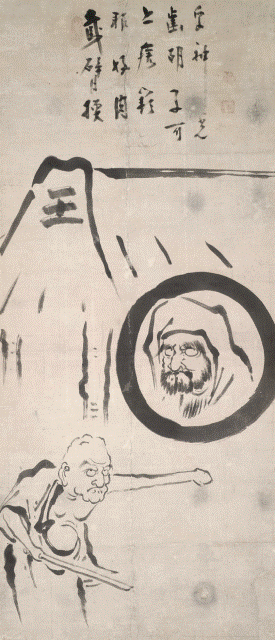
Eka Danpi 慧可断臂 (Lit. = Eka [Huike] cutting off his elbow)
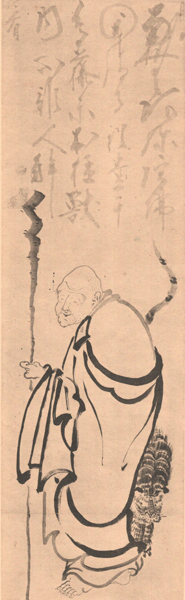
豐干 Fenggan (Bukan, literally "Big Stick", fl. 9th century)
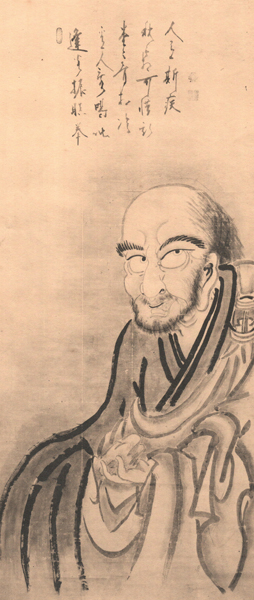
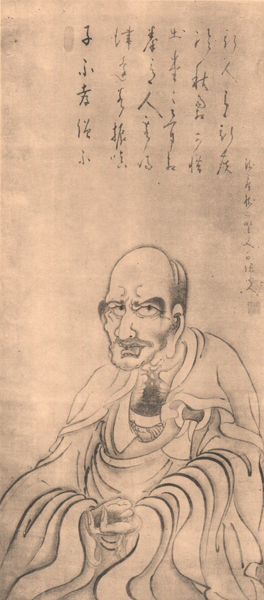
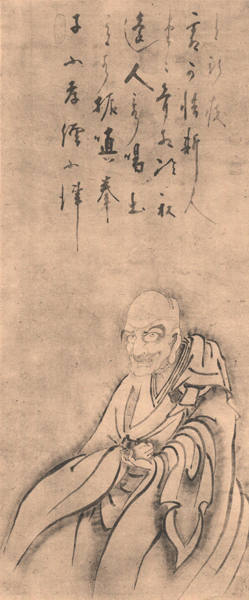
臨濟義玄 Linji Yixuan (Rinzai Gigen,
?–866)
> Show more


「百丈像」 Hyakujō 「達磨図」 Daruma 「臨済像」 Rinzai
百丈懷海 Baizhang Huaihai (720-814) – Bodhidharma - 臨濟義玄 Linji Yixuan (?–866)
Triptych by Hakuin (1750), 貞永寺 Kan'ei- ji
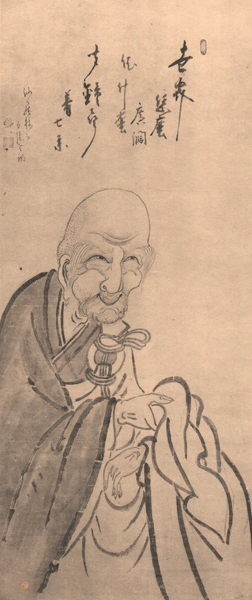
雲門文偃 Yunmen Wenyan (Ummon Bun'en, 864–949)
> Show more
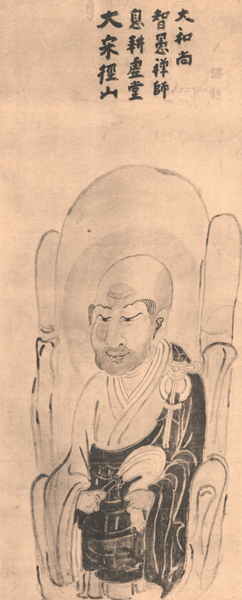
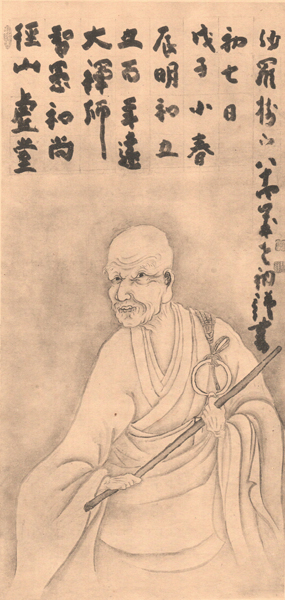
虚堂智愚 Xutang Zhiyu (Kidō Chigu, 1185-1269)
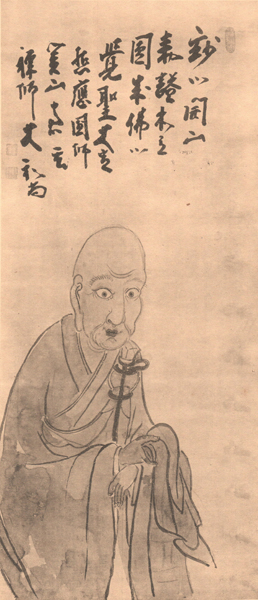
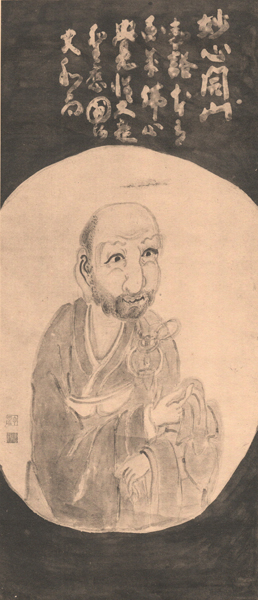
関山慧玄 / 關山慧玄 Kanzan Egen (1277–1360), Japanese Rinzai Zen Buddhist monk, founder of Myōshin-ji Temple
> Show more


南浦紹明 Nanpo Jōmyō (大應國師 /
大応国師
Daiō Kokushi, 1235–1308)
> Show more


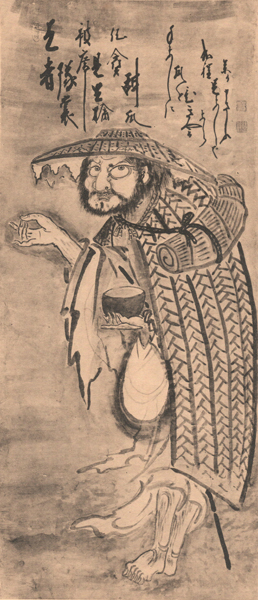
宗峰妙超 Shūhō Myōchō (大燈国師 Daitō Kokushi, 1282–1337), and as a Beggar
> Show more

愚堂東寔 Gudō Tōshoku (1577–1661)

太原雪斎 / 太原崇孚 Taigen Sessai / Taigen Sūfu (1495-1555)
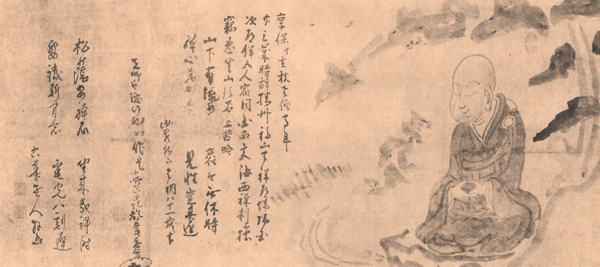
Self-portrait
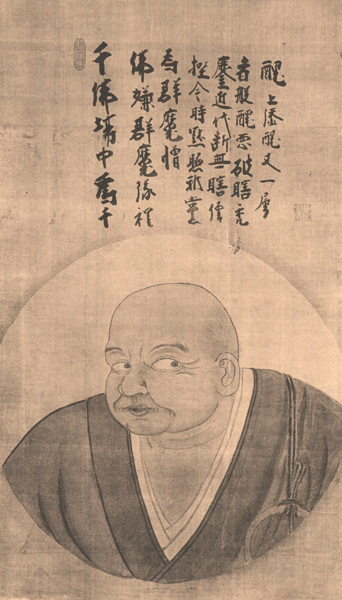
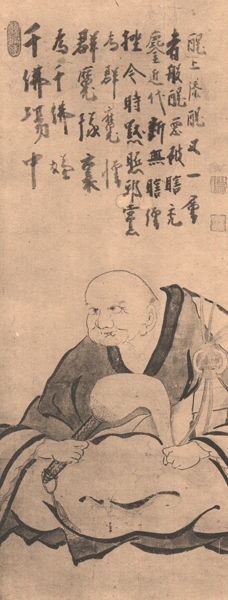
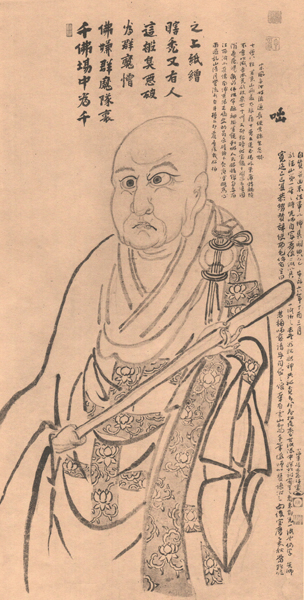
Self-portrait
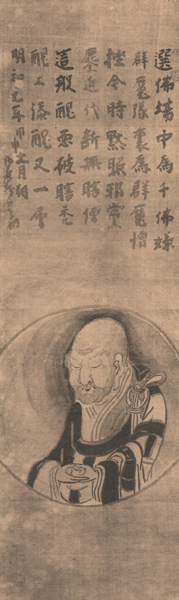
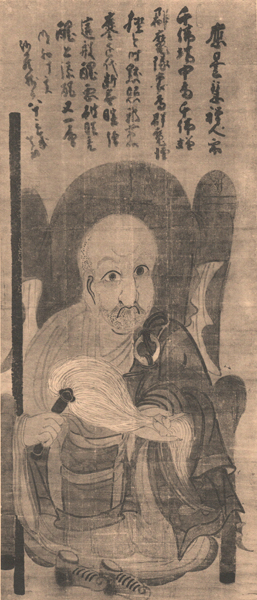
Self-portrait
Hakuin's Dharma Lineage
 Portrait paintings by Hakuin
菩提達磨 Bodhidharma, Putidamo (Bodaidaruma ?-532/5)
大祖慧可 Dazu Huike (Taiso Eka 487-593)
鑑智僧璨 Jianzhi Sengcan (Kanchi Sōsan ?-606)
大毉道信 Dayi Daoxin (Daii Dōshin 580-651)
大滿弘忍 Daman Hongren (Daiman Kōnin 601-674)
大鑑慧能 Dajian Huineng (Daikan Enō 638-713)
南嶽懷讓 Nanyue Huairang (Nangaku Ejō 677-744)
馬祖道一 Mazu Daoyi (Baso Dōitsu 709-788)
百丈懷海 Baizhang Huaihai (Hyakujō Ekai 750-814)
黃蘗希運 Huangbo Xiyun (Ōbaku Kiun ?-850)
臨濟義玄 Linji Yixuan (Rinzai Gigen ?-866)
興化存獎 Xinghua Cunjiang (Kōke Zonshō 830-888)
南院慧顒 Nanyuan Huiyong (Nan'in Egyō ?-952)
風穴延沼 Fengxue Yanzhao (Fuketsu Enshō 896-973)
首山省念 Shoushan Shengnian (Shuzan Shōnen 926-993)
汾陽善昭 Fenyang Shanzhao (Fun'yo Zenshō 947-1024)
石霜 / 慈明 楚圓 Shishuang/Ciming Chuyuan (Sekisō/Jimei Soen 986-1039)
楊岐方會 Yangqi Fanghui (Yōgi Hōe 992-1049)
白雲守端 Baiyun Shouduan (Hakuun Shutan 1025-1072)
五祖法演 Wuzu Fayan (Goso Hōen 1024-1104)
圜悟克勤 Yuanwu Keqin (Engo Kokugon 1063-1135)
虎丘紹隆 Huqiu Shaolong (Kukyū Jōryū 1077-1136)
應庵曇華 Yingan Tanhua (Ōan Donge 1103-1163)
密庵咸傑 Mian Xianjie (Mittan Kanketsu 1118-1186)
松源崇岳 Songyuan Chongyue (Shōgen Sūgaku 1132-1202)
運庵普巖 Yunan Puyan (Un'an Fugan 1156–1226)
虛堂智愚 Xutang Zhiyu (Kidō Chigu 1185–1269)
南浦紹明 Nampo Jōmyō (1235-1308) [大應國師 Daiō Kokushi]
宗峰妙超 Shūhō Myōchō (1282-1337) [大燈國師 Daitō Kokushi
關山慧玄 Kanzan Egen (1277-1360) [無相大師 Musō Daishi]
授翁宗弼 Juō Sōhitsu (1296-1380)
無因宗因 Muin Sōin (1326-1410)
日峰宗舜 Nippō Shōshun (1367-1448)
義天玄詔 Giten Genshō
雪江宗深 Sekkō Sōshin (1408–1486)

特芳禪傑 Tokuhō Zenketsu (1419–1506) |
東陽英朝 Tōyō Eichō (1428-1504) |
隱山惟 琰 Inzan Ien (1751-1814) 卓洲胡僊 Takujū Kosen (1760–1833) |
|
A ZENGA, HAKUIN EKAKU (1685-1768) FESTÉSZETE
Az Edo-kori (1600-1867) hosszú békeidőszak számos változást hozott a vallási életben is. Annak ellenére, hogy minden japánnak rendelkeznie kellet egy buddhista kolostorhoz tartozását igazoló tanusítvánnyal, a mindennapokban a buddhizmusnak kevesebb szerep jutott. A buddhizmus szerepének csökkenésével párhuzamosan egyre kevesebb igény mutatkozott a szerzetes-festők képei vagy pedig a buddhista tematikájú festmények iránt is. A katonai réteg inkább a kínai eredetű témák, vagy a színes zsánerképek iránt érdeklődőtt, így a szerzetesek művészi képességei háttérbe szorultak. A hangsúly a zengá kra került át, azokra a festményekre, melyeket Zen mesterek és szerzetesek készítettek meditációs gyakorlatként, vagy pedig a gyakorlók számára vizuális segédeszközként. A téma igen változatos volt, tájképek vagy kóan ok, a racionális gondolkodással nem megválaszolható kérdések megjelenítése, vagy a meditációval kapcsolatos szavak, illetve jelenetek korábbi Zen mesterek életéből. Az egyszerű tusfestményeket ki lehetett függeszteni, és elérendő célként vagy „mottóként“ állandóan rájuk pillantani. A képek általában széles, lendületes ecsetvonásokkal készültek, megfestésükhöz a kalligráfia jelentette a hátteret, s nem a festészeti képzés.
A zenga egyik legnevesebb mestere Hakuin Ekaku (1685-1768). A szerzetes korának egyik legbefolyásosabb Zen mestere, tanár, festő, kalligráfus. Festőként szinte előképzettség nélkül alkotott jelentős, erőteljes műveket. A Zen gyakorlás fontos elemévé tette a festést, főként a helyi motívumokból vagy a mindenki által jól ismert témákból merített, hogy minél szélesebb közönséghez szólhasson. Témáit gyakran humoros vagy szatírikus módon ábrázolta, hogy didaktikus céljait elérje. Tizenöt esztendős korában állt szerzetesnek, s élete hátralevő részében kemény fizikai és szellemi gyakorlatokat végzett. Harminckét éves korában hazatért szülővárosába, hogy résztvegyen a helyi kolostor újjáépítésében. Számos tanítványa, követője lett itt később. Tanítási módszere a kóan okon alapult. Zenga képek festésével hatvan esztendős kora után kezdett foglalkozni, s haláláig alkotott. Egyik neves festménye 1766-ból is egy kóant dolgoz fel: „Hogyan hangzik egy tenyér tapsa?“. A képen Hotei (Maitréja) látható, amint vászonzsákján áll, egyik kezét nyitott tenyérrel a néző felé fordítja, másikat pedig ruhájába rejti. „Hogyan hangzik egy tenyér? Ha összeütöd két tenyered, éles hangot hallasz, de ha felemeled egyik tenyered, nincs sem hang, sem illat… ha egyenesen tanulmányozod ezt a kōant, azon a helyen, ahol a racionális tudás kialszik és véget érnek a szavak, hirtelen kihúzod a születés és a halál karmikus gyökerét és áttöröd a tudatlanság barlangját.“
Bincsik Mónika


