Terebess Gábor Dharma-származásrendje
Gabor Terebess’s Zen Lineage Chart
PDF: Lineage Chart of the Zen Ancestors in China
The Two Main Lineages of Modern Sōtō
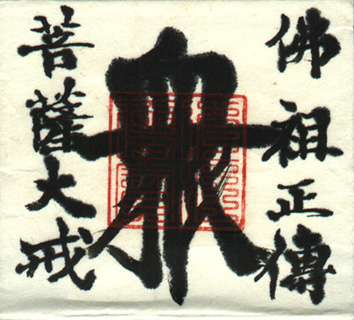
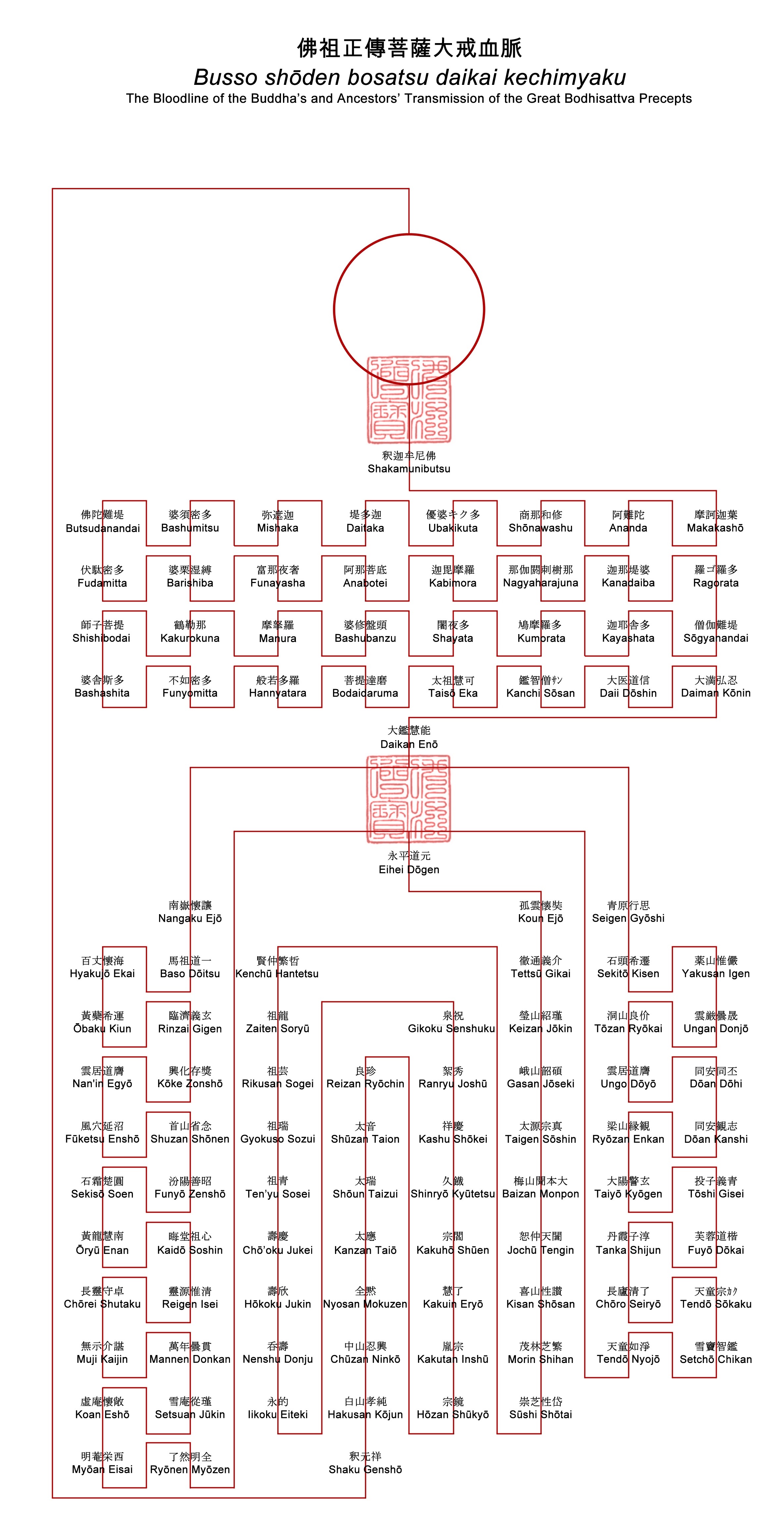
佛祖正傳菩薩大戒血脈
Busso shōden bosatsu daikai kechimyaku
The Bloodline of the Buddha’s and
Ancestors’ Transmission of the Great Bodhisattva Precepts
Blood-vein of the Great Bodhisattva Precepts Authentically Transmitted by Buddhas and Ancestors
Terebess Gábor dharma-származásrendje
A vérvonal Daikan Enō (大鑒慧能 Ta-csien Huj-neng), a hatodik pátriáka után kettéválik,
majd a bal oldali Rinzai (臨濟宗 Lin-csi) iskola és a jobb oldali Sōtō (曹洞宗 Cao-Tung) iskola
ismét egyesül Eihei Dōgen személyében. Így utódai is őrzik mindkét nagy iskola hagyományait.
Gabor Terebess’s Zen Lineage Chart
It is worth mentioning that the line gets splitted apart
at Dajian Huineng and join back up at Eihei Dōgen
as the left-hand side is the Rinzai (Linji) line*,
and the right-hand side is the Sōtō (Caodong) line**,
reflecting Dōgen's early teacher Myōzen, as well as Rujing.
*
【黄檗・臨済系 法系】
南嶽懐譲和尚様から
佛樹明全和尚様
** 【曹洞系 法系】
青原行思和尚様から
天童如浄和尚様
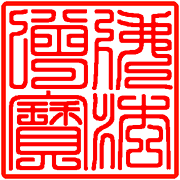
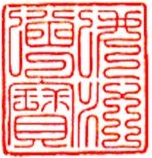
三寶印 sambō-in (佛法僧寶印 Three Treasures seal)
Shakamunibutsu (Shākyamuni Buddha, Shijiamouni Fo 釋迦牟尼佛)
The Indian Patriarchs:
1. Makakashō (Mahākāshyapa 摩訶迦葉)
2. Ananda (Ānanda 阿難陀)
3. Shōnawashu (Shanakavāsa/Shānavāsin 商那和修)
4. Ubakikuta (Upagupta 優婆掬多)
5. Daitaka (Dhrtaka/Dhītika 提多迦)
6. Mishaka (Micchaka/Mishaka 彌遮迦)
7. Bashumitsu (Vasumitra 婆須密)
8. Butsudanandai (Buddhanandi 浮陀難提, 佛陀難提)
9. Fudamitta (Buddhamitra 浮陀密多, 佛陀密多)
10. Barishiba (Pārshva 婆栗濕婆, 脅尊者)
11. Funayasha (Puṇyayashas 富那夜奢)
12. Anabotei (Ānabodhi/Ashvaghoṣa 阿那菩提, 馬鳴)
13. Kabimora (Kapimala 迦毘摩羅)
14. Nagyaharajuna (Nāgārjuna 龍樹, 那伽閼樹那)
15. Kanadaiba (Kāṇadeva 迦那提婆 (提婆), 聖天)
16. Ragorata (Rāhulata/Rāhulabhadra 羅睺羅多)
17. Sōgyanandai (Saṃghanandi 僧伽難提)
18. Kayashata (Gayashāta 僧伽舍多)
19. Kumorata (Kumārata/Kumāralāta 鳩摩羅多)
20. Shayata (Jayata/Shayata 闍夜多)
21. Bashubanzu (Vasubandhu 世親, 天親, 婆修盤頭)
22. Manura (Manorata/Manorhita/Manothata 摩拏羅)
23. Kakurokuna (Haklenayashas 鶴勒那)
24. Shishibodai (Aryasimha/Simha Bhikshu/Siṃhabodhi 師子菩提)
25. Bashashita (Basiasita/Vasi Astia 婆舍斯多)
26. Funyomitta (Puṇyamitra 不如密多)
27. Hanyattara (Prajñādhāra/Prajñātāra 般若多羅)
The Chinese Patriarchs:
28/1. Bodaidaruma
(Bodhidharma, Putidamo 菩提 達磨 ?-532/5)
29/2. Taiso Eka
(Dazu Huike 大祖 慧可 487-593)
30/3. Kanchi Sōsan
(Jianzhi Sengcan 鑑智 僧璨 ?-606)
31/4. Daii Dōshin
(Dayi Daoxin 大毉 道信 580-651)
32/5. Daiman Kōnin
(Daman Hongren 大滿 弘忍 601-674)
33/6. Daikan Enō
(Dajian Huineng 大鑑 慧能 638-713)
|
34/7. Nangaku Ejō |
34/7. Seigen Gyōshi |
|
35/8. Baso Dōitsu |
35/8. Sekitō Kisen |
|
36/9. Hyakujō Ekai |
36/9. Yakusan Igen |
|
37/10. Ōbaku Kiun |
37/10. Ungan Donjō |
|
The Linji (Rinzai) Patriarchs:
|
The Caodong (Sōtō) Patriarchs: |
|
38/11. Rinzai Gigen |
38/11. Tōzan Ryōkai |
|
39/12. Kōke Zonshō |
39/12. Ungo Dōyō |
|
40/13. Nan'in Egyō |
40/13. Dōan Dōhi |
|
41/14. Fūketsu Enshō |
41/14. Dōan Kanshi |
|
42/15. Shuzan Shōnen |
42/15. Ryōzan Enkan |
|
43/16. Funyō Zenshō |
43/16. Taiyō Kyōgen |
|
44/17. Tōshi Gisei |
|
|
45/18. Ōryū Enan |
45/18. Fuyō Dōkai |
|
46/19. Kaidō Soshin |
46/19. Tanka Shijun |
|
47/20. Reigen Isei |
47/20. Chōro Seiryō [Shinketsu ~] |
|
48/21. Chōrei Shutaku |
48/21. Tendō Shōkaku [Wanshi ~] |
|
49/22. Muji Kaijin |
49/22. Setchō Chikan |
|
50/23. Mannen Donkan |
50/23. Tendō Nyojō |
51/24. Setsuan Jūkin |
|
|
52/25. Koan Eshō |
|
|
The Japanese Rinzai Patriarchs: |
|
|
53/26/1. Myōan Eisai |
|
|
54/27/2. Ryōnen Myōzen |
|
The Japanese Sōtō Patriarchs:
51/24/1. Eihei Dōgen
(永平 道元 1200-1253)
52/25/2. Koun Ejō
(孤雲 懐奘 1198-1280)
53/26/3. Tettsū Gikai
(徹通 義介 1219-1309)
54/27/4. Keizan
Jōkin
(螢山 紹瑾 1268-1325)
55/28/5. Gasan Jōseki
(峨山 韶碩
1275-1366)
56/29/6. Taigen Sōshin
(太源 宗真
?-1371)
57/30/7. Baizan Monpon
(梅山 聞本 ?-1417)
58/31/8. Jochū Tengin
(如仲 [恕仲] 天誾 1365-1437)
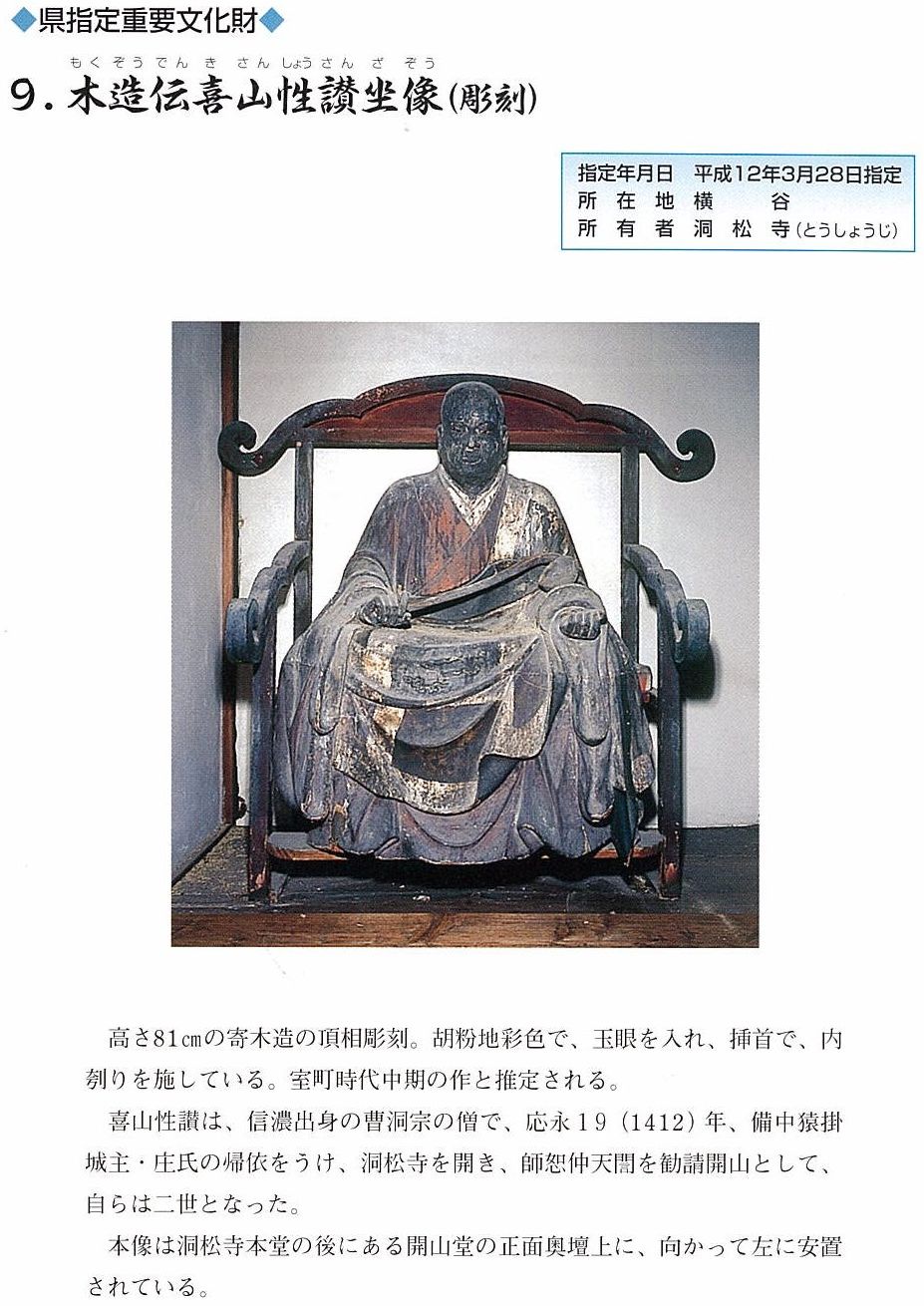
59/32/9. Kisan Shōsan
(喜山 性讃 1377-1442)
60/33/10. Morin Shihan
(茂林 芝繁 1393-1487)
61/34/11.
Sūshi Shōtai
(崇芝 性岱 1414-1496)
62/35/12. Kenchū
Hantetsu
(賢仲 繁喆 [繁哲] 1438-1512)
63/36/13. Zaiten Soryū
(在天 祖龍)
64/37/14. Rikusan Sogei
(六山 祖芸)
65/38/15. Gyokusō Sozui
(玉叟
祖瑞)
66/39/16. Ten'yū Sosei
(天祐 祖青)
67/40/17. Chō'oku Jukei
(兆屋 壽慶)
68/41/18. Hōkoku Jukin
(豊国 壽欣)
69/42/19. Nenshū Donju
(年州 呑壽)
70/43/20. Ikoku Eiteki
(意国 永的)
71/44/21. Gikoku Senshuku
(義国 泉祝)
72/45/22. Ranryū Joshū
(蘭龍 絮秀)
73/46/23. Kashū Shōkei
(嘉州 祥慶)
74/47/24. Shinryō Kyūtetsu
(心梁 久鐡)
75/48/25. Kakuhō Shūen
(覚峯 宗閻)
76/49/26. Kakuin Eryō
(覚胤 慧了)
77/50/27. Kakutan Inshū
(覚堪 胤宗)
78/51/28. Hōzan Shūkyō
(寶山 宗鏡)
79/52/29. Reizan Ryōchin
(齢山 良珍)
80/53/30. Shūzan Taion
(秀山 太音)
81/54/31. Shōun Taizui
(祥雲 太瑞)
82/55/32. Kanzan Taiō
(喚山 太應)
83/56/33. Nyosan Mokuzen
(如山 黙全)
84/57/34. Chūzan Ninkō
(中山
忍興)
85/58/35. Hakusan
Kōjun
(白山 孝純 1914-2007)
> [Noiri rōshi 野圦 老師]
86/59/36. Hōrin Daigyō (寶輪 大行 1938-2011) > [Moriyama rōshi 森山 老師] |
86/59/36. Shaku Genshō (釈 元祥 1944-) > [Gábor Terebess] |
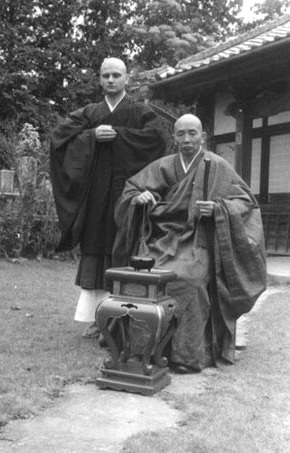
Hakusan Kôjun Noiri rôshi and Genshô
(Gabor Terebess), 1967
Indiától Kínán át Japánig fut a szótó zen „vérvonala" — ennek emlékét három részes csuhájával a szerzetes magán viseli:
alsó ruházata hagyományos japán (kimonó), fölötte a bő ujjas köntös kínai (koromo), végül bal vállán a lepel indiai eredetű (kesza).

|
佛法僧寶 buppōsō bō (Reading up to down, R to L) 3 1 僧佛 |
血脈包紙・袋
|
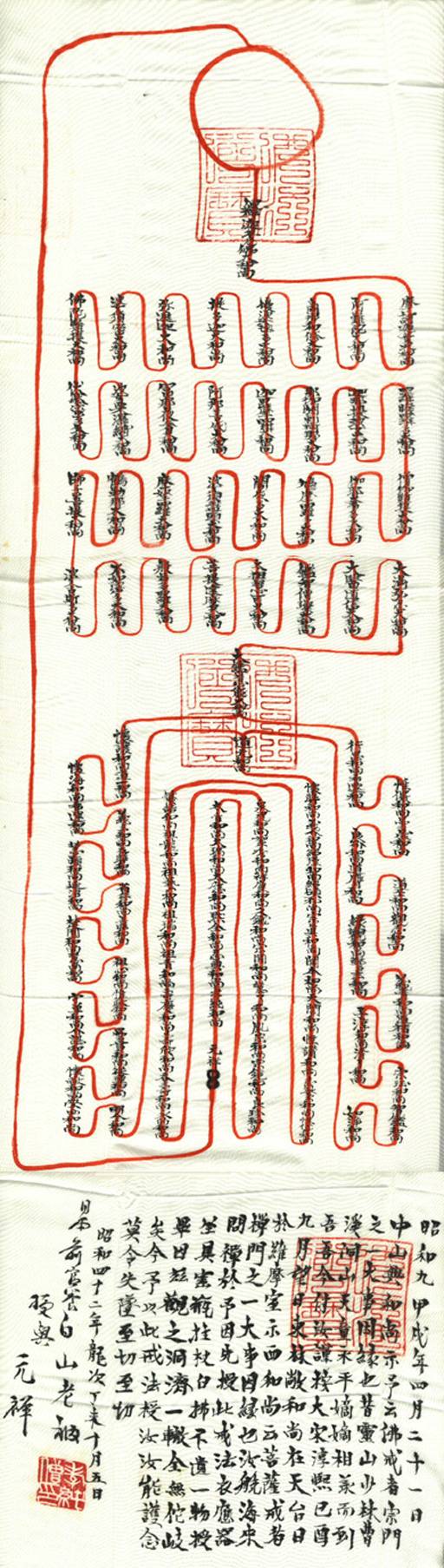
血脈 Kechimyaku: a genealogy of Zen succession
Terebess Gábor
zen buddhista szerzetessé avatásának selyemre írt dokumentuma mestertől-mesterig ágazó „családfával", töretlen „szellemi
vérvonallal".
A dokumentum egy teljes évig szerepelt a budapesti Néprajzi Múzeum kiállításán Terebess Gábor sok más zen emlékével,
vö. Időképek (Katalógus), Néprajzi Múzeum, Budapest, 2001. A fenti kép a 382. oldalon.
Certificate of
Zen Buddhist Ordination of G. Terebess (元祥 Genshô), handwritten kanji by Hakusan Kōjun [白山 孝純 1914-2007, aka Noiri rōshi 野圦 老師] on silk.
The line that connects the teacher and disciple returning to
an empty circle above Shakyamuni.
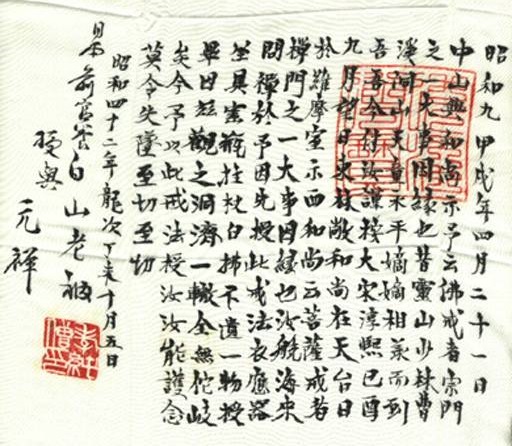
昭和九甲戌年四月二十一日
中山興和尚示予云 、 佛戒者宗門之一大事因緣也。昔靈山 、 少林 、 曹溪 、 洞山 、 天童 、 永平 、 嫡嫡相承而到吾 。吾今付汝。
謹按大宋淳熈已酉九月望日、東林敞和尚、在天台日於維摩室示西和尚云 、「 菩薩戒者禪門之一大事因緣也 。汝航海来問禪於予。因先授此戒、法衣 、応器、座具、寶瓶 、拄杖、 白払、不遺一物授畢。」
因茲観之洞濟一輟全無佗岐矣。今予以此戒法授汝 。 汝能護念莫令失墜。至切!至切!
昭和四十二年龍次丁未十月五日
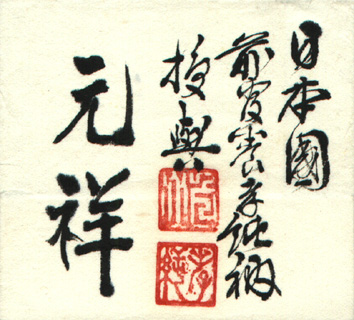
日本前官養白山老衲
授與
元祥On the twenty-first day of the fourth month of the ninth year of the Shōwa Era [April 21, 1934. 甲戌] Master Chūzan Ninkō [中山忍興] instructed me saying,
“Buddha-precept is the single-great-matter of causes and conditions in the lineage-gate. In ancient times, through Shakyamuni Buddha at Vulture Peak, Bodhidharma at Shaolin temple, Huineng at Caoxi mountain, Liangjie of Mt. Dongshan, Rujing of Mt. Tiantong, and Master Eihei, these precepts have been transmitted from a legitimate teacher to a legitimate disciple and have reached to me. Now I entrust them to you.
I humbly consider that on the full-moon day of the 9th month in 1189, while Master Chang of Donglin Monastery was staying on Mt. Tiantai, within the Vimalakirti Hall, he instructed Master Eisai saying, ‘The Bodhisattva Precept is the single-great-matter of causes and conditions within the Zen-gate. You sailed the ocean to come to this country and asked me about Zen. Therefore, first I bestowed these Precepts, the Dharma robe, the set of ōryōki bowl, the bowing cloth, the water jar, the staff and the whisk. I have given everything to you without leaving out anything.'
Reflecting on these, Sōtō and Rinzai are within one and the same track completely without divergence. Now I entrust these Precepts to you. You should protect and keep them. Do not let them be lost or cast down. From the bottom of my heart I entreat you.”
On the fifth day of the tenth month of the forty-second year of the Shōwa Era [October 5, 1967. 丁未 ],
Japan, at Kan'yōan [官養庵, in Shimada-shi 島田市, Shizuoka-ken 静岡県], old monk Hakusan [野圦白山孝純 Noiri Hakusan Kōjun, 1914-2007]
Bestows to Genshō [元祥 Gábor Terebess, born 1944].English translation by 奥村正博 Okumura Shōhaku
FOLDING THE ANCESTRAL LINEAGE
1. Start with folding the left edge 1/3 of the total sheet width toward the opposite edge.
2. Fold the right edge over the left.
3. Fold the top edge of the folded lineage to the bottom edge.
4. Fold the new top edge 1/3 of the way toward the bottom
5. Fold the bottom 1/3 of the sheet back under the remainder
https://www.youtube.com/watch?v=dwj6SBXxmes
Gabor Terebess’s Dharma
name (Terebess Gábor dharma-neve): 元祥 = „Eredendő
Jószerencse”, „Eleve Áldott”
(釈 Shaku = Shakukamuni, Shākyamuni; “Shaku” indicates the family name of the Buddha Sakyamuni)
Terebess Gábor zen szerzetessé avatásának fotó-dokumentumai
Zen Buddhist ordination of G. Terebess
„In the Kechimyaku we write the names of the Ancestors in Buddhism to whom the Precepts were Transmitted. We call it the Kechimyaku or Kaimyaku. The real existence is beyond delusion and the transcendental Precepts. We should know and understand this same Budhahood, and its whole representation, on the silk of the Kechimyaku. The reason is as follows.
First of all, there is a circle at the top. We then write Shakyamuni Buddha, Makakashyo, Ananda, the eighty and more ancestors, the present master and the new disciple. The red line comes from the circle at the top and penetrates the names of the above, returning back to the same circle above Shakyamuni Buddha. Therefore the new disciple who is converted is one with the immaculate circle above Shakayamuni Buddha which has no beginning and no end.
The so-called Mind of the Buddha and that of ourselves is the same and not different. We should realise the true meaning of the Kechimyaku.”(Suigan Yogo (1912-1996), fukukanin at Daihonzan Sōji-ji, 1967)
„What is it that gives a firm foundation to Buddhsim? To this we must answer that it is the uninterrupted direct succession from master to disciple (menju shihô). In this direct succession (menju) the personalities of master and disciple are fused into one, the spirit being handed on from one person to the next is without interruption. This Transmission is not based on historical studies, but stands firmly on deep faith.”
(Chisan Kohô (1879-1967), Chief Abbot of Daihonzan Sōji-ji)
Dôgen’s Shôbôgenzô
[57] MENJU
The Face-to-Face TransmissionMen means face, and ju means transmission. Menju means the transmission of the Dharma from a master to a disciple face to face. In Buddhism, what is transmitted from a master to a disciple is not only abstract theory, but also something real, including actual conduct, physical health, and intuitional wisdom. Therefore the transmission of this real something cannot be actualized solely through explanations with words, or simply by passing on some manuscript. For this reason, the Dharma that Gautama Buddha taught has been transmitted in person from master to disciple since the days of Gautama Buddha. Without this personal contact, the Buddhist Dharma cannot be transmitted. In this chapter, Master Dogen praises the transmission of the Buddhist Dharma and explains its importance.
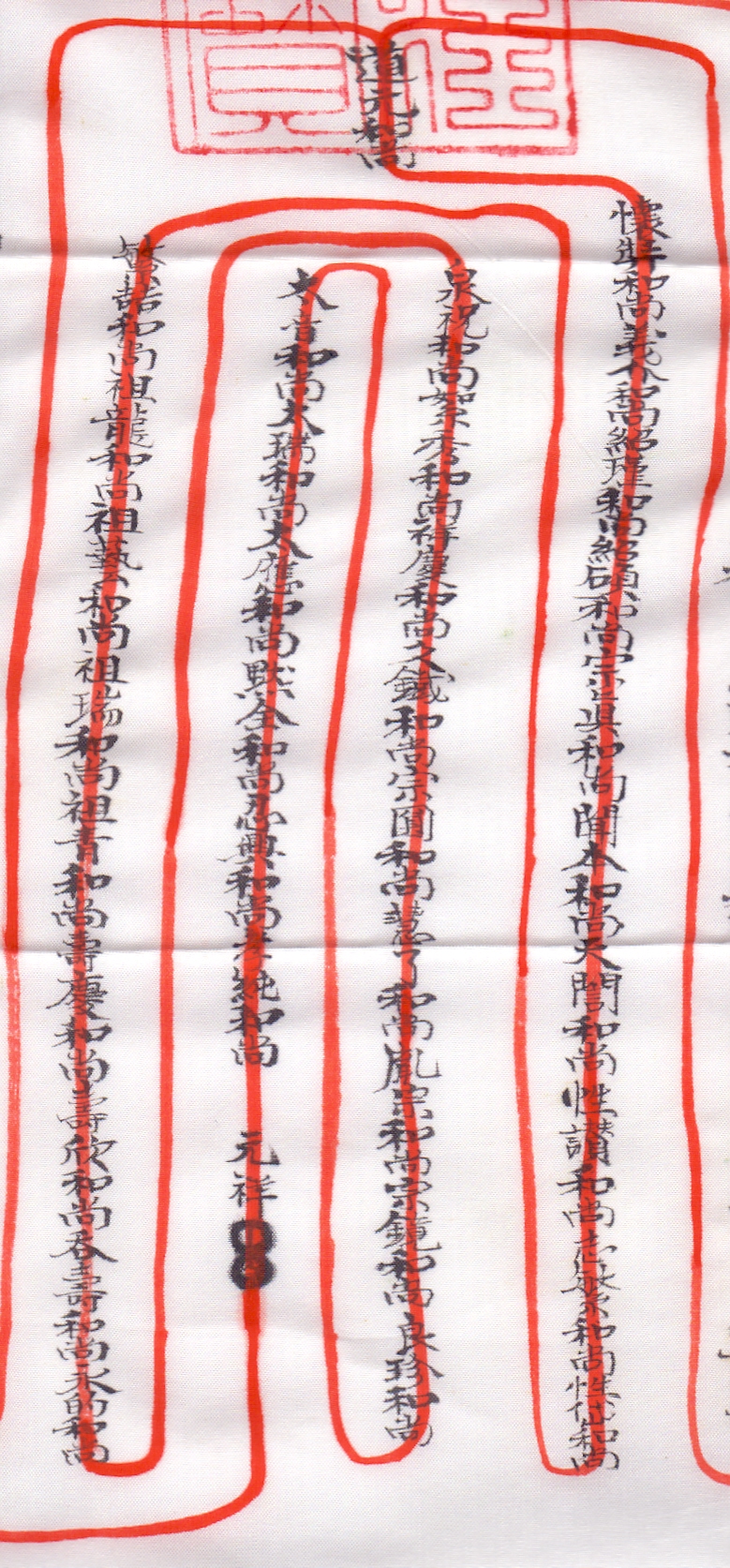
釈元祥の血脈 Kechimyaku
of Shaku Genshō
A Dharma átadásának leszármazási vonala Terebess
Gáborig
Gabor Terebess’s Zen Lineage Chart /
Sōtō Zen Ancestors' Names
Bibashibutsu Daioshō 毘婆尸佛大和尚
Shikibutsu Daioshō 尸棄佛大和尚
Bishafubutsu Daioshō 毘舎浮佛大和尚
Kurusonbutsu Daioshō 拘留孫佛大和尚
Kunagonmunibutsu Daioshō 拘那含牟尼佛大和尚
Kashōbutsu Daioshō 拘那含牟尼佛大和尚
Shakamunibutsu Daioshō 釈迦牟尼佛大和尚
Makakashō Daioshō 摩訶迦葉大和尚
Ananda Daioshō 阿難陀大和尚
Shōnawashu Daioshō 商那和修大和尚
Ubakikuta Daioshō 優婆キク多大和尚
Daitaka Daioshō 堤多迦大和尚
Mishaka Daioshō 弥遮迦大和尚
Bashumitsu Daioshō 婆須密多大和尚
Butsudanandai Daioshō 佛陀難堤大和尚
Fudamitta Daioshō 伏駄密多大和尚
Barishiba Daioshō 婆栗湿縛大和尚
Funayasha Daioshō 富那夜奢大和尚
Anabotei Daioshō 阿那菩底大和尚
Kabimora Daioshō 迦毘摩羅大和尚
Nagyaharajuna Daioshō 那伽閼刺樹那大和尚
Kanadaiba Daioshō 迦那堤婆大和尚
Ragorata Daioshō 羅ゴ羅多大和尚
Sōgyanandai Daioshō 僧伽難堤大和尚
Kayashata Daioshō 迦耶舎多大和尚
Kumorata Daioshō 鳩摩羅多大和尚
Shayata Daioshō 闍夜多大和尚
Bashubanzu Daioshō 婆修盤頭大和尚
Manura Daioshō 摩拏羅大和尚
Kakurokuna Daioshō 鶴勒那大和尚
Shishibodai Daioshō 師子菩提大和尚
Bashashita Daioshō 婆舎斯多大和尚
Funyomitta Daioshō 不如密多大和尚
Hannyatara Daioshō 般若多羅大和尚
Bodaidaruma Daioshō 菩提達磨大和尚
Taisō Eka Daioshō 太祖慧可大和尚
Kanchi Sōsan Daioshō 鑑智僧サン大和尚
Daii Dōshin Daioshō 大医道信大和尚
Daiman Kōnin Daioshō 大満弘忍大和尚
Daikan Enō Daioshō 大鑑慧能大和尚
Seigen Gyōshi Daioshō 青原行思大和尚
Sekitō Kisen Daioshō 石頭希遷大和尚
Yakusan Igen Daioshō 薬山惟儼大和尚
Ungan Donjō Daioshō 雲厳曇晟大和尚
Tōzan Ryōkai Daioshō 洞山良价大和尚
Ungo Dōyō Daioshō 雲居道膺大和尚
Dōan Dōhi Daioshō 同安同丕大和尚
Dōan Kanshi Daioshō 同安観志大和尚
Ryōzan Enkan Daioshō 梁山縁観大和尚
Taiyō Kyōgen Daioshō 大陽警玄大和尚
Tōshi Gisei Daioshō 投子義青大和尚
Fuyō Dōkai Daioshō 芙蓉道楷大和尚
Tanka Shijun Daioshō 丹霞子淳大和尚
Chōro Seiryō Daioshō 長廬清了大和尚
Tendō Sōkaku Daioshō 天童宗カク大和尚
Setchō Chikan Daioshō 雪竇智鑑大和尚
Tendō Nyojō Daioshō 天童如淨大和尚
Eihei Dōgen Daioshō 永平道元大和尚
Koun Ejō Daioshō 孤雲懐奘大和尚
Tettsū Gikai Daioshō 徹通義介大和尚
Keizan Jōkin Daioshō 瑩山紹瑾大和尚
Gasan Jōseki Daioshō 峨山韶碩大和尚
Taigen Sōshin Daioshō 太源宗真大和尚
Baizan Monpon Daioshō 梅山聞本大和尚
Jochū Tengin Daioshō 恕仲天誾大和尚
Kisan Shōsan Daioshō 喜山性讃大和尚
Morin Shihan Daioshō 茂林芝繁大和尚
Sūshi Shōtai Daioshō 崇芝性岱大和尚
Kenchū Hantetsu Daioshō 賢仲繁哲大和尚
Zaiten Soryū Daioshō 在天祖龍大和尚
Rikusan Sogei Daioshō 六山祖芸大和尚
Gyokusō Sozui Daioshō 玉叟祖瑞大和尚
Ten'yū Sosei Daioshō 天祐祖青大和尚
Chō'oku Jukei Daioshō 兆屋壽慶大和尚
Hōkoku Jukin Daioshō 豊国壽欣大和尚
Nenshū Donju Daioshō 年州呑壽大和尚
Ikoku Eiteki Daioshō 意国永的大和尚
Gikoku Senshuku Daioshō 義国泉祝大和尚
Ranryū Joshū Daioshō 蘭龍絮秀大和尚
Kashū Shōkei Daioshō 嘉州祥慶大和尚
Shinryō Kyūtetsu Daioshō 心梁久鐡大和尚
Kakuhō Shūen Daioshō 覚峯宗閻大和尚
Kakuin Eryō Daioshō 覚胤慧了大和尚
Kakutan Inshū Daioshō 覚堪胤宗大和尚
Hōzan Shūkyō Daioshō 寶山宗鏡大和尚
Reizan Ryōchin Daioshō 齢山良珍大和尚
Shūzan Taion Daioshō 秀山太音大和尚
Shōun Taizui Daioshō 祥雲太瑞大和尚
Kanzan Taiō Daioshō 喚山太應大和尚
Nyosan Mokuzen Daioshō 如山黙全大和尚
Chūzan Ninkō Daioshō 中山忍興大和尚
Hakusan Kōjun Daioshō 白山孝純大和尚 [野圦 老師 Noiri rōshi]
Shaku Genshō 釈元祥 [Gábor Terebess]
Note:
The Ancestral Line (given with the traditionally chanted Sino-Japanese pronunciations) begins with the names of the Seven Buddhas, starting with Bibashibutsu Daioshō down to the historical Buddha, Shakyamunibutsu Daioshō. The suffix butsu means Buddha and the word Daioshō that follows each name means Great Priest*. The Seven Buddhas are the Buddhas of this world, the first six being those who taught Shakyamuni. Collectively they can be considered as the endless succession of Buddhas of past, present, and future, and as representative of that which teaches beyond the world of appearances. Following Shakyamunibutsu is the list of those who became Shakyamuni and passed on the teaching, down to Hakusan Kōjun Daioshō.
*Daioshō (title of ancestors) / Great Upādhyāya (Preceptor) 大和尚 (Ch. da heshang)